
25.00€



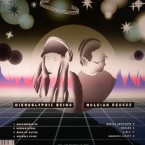
Africans With Mainframes – K.M.T. – 2LP
25.00€
Soul Jazz Records
Jamal Moss, aka Hieroglyphic Being, returns for a new second album on Soul Jazz Records, after last year’s debut The Acid Documents. this time under the name Africans with Mainframes.
Hieroglyphic Being and fellow Chicago producer Noleian Reusse have been releasing music under the name Africans with Mainframes for over 15 years now, ever since their debut on Hieroglyphic Being’s own Mathematics Recordings label in 2005. “K.M.T.” is the debut album from the group, a collage of apocalyptic Chicago acid meets industrial and transcendental post-house machine funk.
Out of stock
Jamal Moss, aka Hieroglyphic Being, returns for a new second album on Soul Jazz Records, after last year’s debut The Acid Documents. this time under the name Africans with Mainframes.
Hieroglyphic Being and fellow Chicago producer Noleian Reusse have been releasing music under the name Africans with Mainframes for over 15 years now, ever since their debut on Hieroglyphic Being’s own Mathematics Recordings label in 2005. “K.M.T.” is the debut album from the group, a collage of apocalyptic Chicago acid meets industrial and transcendental post-house machine funk.
Both intense and unique, the album of forward-thinking, experimental, boundary-pushing Afro-futurist electronic music shows why Hieroglyphic Being is regarded as one of the most serious purveyors of experimental black music today. You can’t stop the prophet!
Born and based in Chicago, Moss’s music embodies two of the cultural foundation blocks of the city’s musical lineage; that of Chicago’s original Acid House sound (c. 1986), that of Frankie Knuckles, Phuture, Marshall Jefferson et al, alongside a rigorous experimental sound searching that taps into the cosmic musical lineage of pioneering artist Sun Ra whose Arkestra landed and was based in the city from 1946-61.
Similarly his relationship to Chicago’s original acid house pioneers of the late 80s is no hyperbole. Originally mentored by artist/producers Adonis and Steve Pointdexter, Moss also now runs his own Mathematics label which has released music by foundation acid house pioneers Lil’ Louis, Adonis and many others. To quote Moss, ‘I am the last of the line of producers directly influenced by Ron Hardy (the pioneering acid house DJ) at the Music Box.’
Moss grew up in the south side of Chicago. After being thrown out of the home of his adoptive parents, he then spent three years homeless living on the streets of Chicago, living a nocturnal existence as a gigolo in Chicago’s alternative clubs. He began his career as a DJ at the pioneering Liquid Love parties at Chi-town’s legendary Power House (home of Ron Hardy’s MusicBox) around 1989.
What clearly defines Moss’s music is that while sometimes pushing the limits of sound to an ear-splitting dimension of experimentation and DIY-electronics – the music is always clearly a progression of the lineage of black music. In the words of fellow Chicagoans, The Art Ensemble of Chicago, it is simply ‘Great Black Music.’ And yet in this uniquely defined sound, Moss somehow manages to draw into this world elements of industrial music, German electronic music (Cluster, Harmonia etc), Detroit’s sci-fi techno artists (Atkins, Saunderson, Craig) and more.
Soul Jazz Records
Additional information
| Weight | 450 g |
|---|---|
| Dimensions | 32 × 0.3 × 32 cm |
| Label | |
| Artist | |
| Genre |











On Sale Records
-
 Sunn O))) - Eternity's Pillars B/W Raise The Chalice & Reverential - 12" (Red)
Original price was: 30.00€.24.00€Current price is: 24.00€.
Sunn O))) - Eternity's Pillars B/W Raise The Chalice & Reverential - 12" (Red)
Original price was: 30.00€.24.00€Current price is: 24.00€.
-
 Benjamin Booker - Lower - LP (Clear)
Original price was: 32.00€.15.00€Current price is: 15.00€.
Benjamin Booker - Lower - LP (Clear)
Original price was: 32.00€.15.00€Current price is: 15.00€.
-
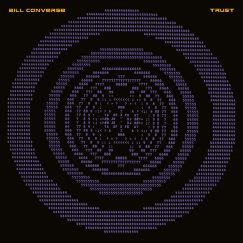 Bill Converse - Trust - LP
Original price was: 28.00€.20.00€Current price is: 20.00€.
Bill Converse - Trust - LP
Original price was: 28.00€.20.00€Current price is: 20.00€.
Label Records
Latest Records
-
 Sleaford Mods - UK Grim - LP
Original price was: 27.00€.24.00€Current price is: 24.00€.
Sleaford Mods - UK Grim - LP
Original price was: 27.00€.24.00€Current price is: 24.00€.
-
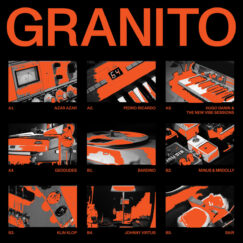 V/A - Granito - LP
22.00€
V/A - Granito - LP
22.00€
-
 Aphex Twin - Blackbox Life Recorder 21f / In A Room7 F760 - CD
Original price was: 15.00€.10.00€Current price is: 10.00€.
Aphex Twin - Blackbox Life Recorder 21f / In A Room7 F760 - CD
Original price was: 15.00€.10.00€Current price is: 10.00€.